Spiderfolk
D&D Spiderfolk Race
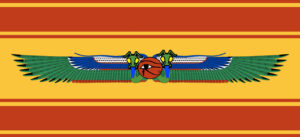
The Spiderfolk live in the mysterious Egyptian-inspired land of دارجلا (Al-Jarad), a region shared with other insectoid races such as the Thri-kreen (grasshopper-like beings) and intelligent ants. In this unique world, insects and arachnids share the land and live in a fragile harmony.
Appearance
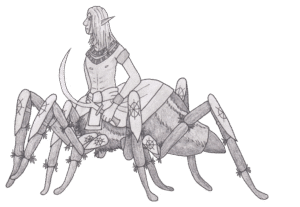
Spiderfolk are a hybrid race whose upper bodies closely resemble those of dark elves, while their lower bodies consist of eight powerful spider legs and a large abdomen. From this abdomen, they can produce and launch webs, which they use to capture enemies, restrain prey, or assist them in movement and climbing.
They possess two powerful chelicerae, which can contain venom and function much like a spider’s fangs. These chelicerae can retract and are often hidden inside their mouths, allowing Spiderfolk to appear more humanoid and making it easier for them to blend in with other races.
However, not all Spiderfolk are born with the same characteristics. Some are born with more distinctly spider-like features, such as six eyes and prominent external chelicerae that resemble those of ordinary spiders. These individuals may have a more intimidating and unmistakably arachnid appearance.
Spiderfolk also possess four arms on their humanoid upper body, giving them exceptional dexterity and allowing them to wield multiple weapons or perform several tasks simultaneously. Their combination of humanoid and arachnid traits makes them a highly adaptable and unusual race.
Al-Jarad
The land of Al-Jarad is a vast and diverse region filled with sprawling swamps, towering mountains, and mysterious underground caves. To the east, the landscape gradually transforms into a vast, arid desert, dominated by enormous pyramids that have stood for centuries.
Al-Jarad is known for its ancient temples, sacred tombs, and forgotten ruins, many of which hold secrets from civilizations long past. Religion plays a major role in the region, with its people maintaining deep connections to their ancient Egyptian-inspired gods.
Among the most revered deities are Bralm, the god of agriculture and insects, and miska, the goddess of spiders. Their influence can be found throughout Al-Jarad, from temples and religious ceremonies to the daily lives of its inhabitants. Ancient depictions of these gods can often be found carved into temple walls, tombs, and monuments scattered across the land.
Pharaohs
Society in Al-Jarad is ruled by seven pharaohs, each representing a different insectoid race:
- The Spider Pharaoh, leader of the Spiderfolk.
- The Grasshopper Pharaoh, ruler of the Thri-kreen.
- The Ant Pharaoh, representative of the ant-like Thri-kreen.
- The Bee Pharaoh, leader of the Vespoids, a bee-like people.
- The Beetle Pharaoh, leader of the Beetle folk.
- the dragonfly Pharaoh, leader of the dragonfly folk.
- the moth Pharaoh, leader of the mothman.
- the abu daqiq Pharaoh , leader of the abu daqiq.
These seven pharaohs govern together in harmony. When a new pharaoh is chosen, it is customary for the old pharaoh to be ceremonially sacrificed and eaten starting with the head, followed by the rest of the body.
Transportation
Inhabitants of Al-Jarad use giant insects as mounts: beetles for land travel, wasps and other flying creatures for air travel. While many insects are gigantic and intelligent, smaller species such as mosquitoes and crane flies are also present.
The Gods of Al-Jarad
The people who live in the land of Al-Jarad believe in seven ancient gods. These gods take the forms of insects and spiders, and each one rules over a different kind of insect or insect-like creature.
- Bralm: God of Agriculture and Insects Bralm is the god of agriculture, nature, and insects. He is closely connected to the growth of crops and the fertility of the land. Farmers pray to Bralm for healthy harvests and protection from pests that could destroy their crops.
- KilMoth: God of the Mothman KilMoth is the mysterious god of the Mothman. He is associated with darkness, secrets, omens, and the creatures that emerge during the night. His followers believe that seeing a Mothman is a sign that something important or dangerous is about to happen.
- Beegawueen: Goddess of Honey, Bees, and Vespoids Beegawueen is the goddess of honey, bees, and the Vespoids. She represents community, hard work, and the protection of the hive. Her followers believe that every member of a community has an important role to play, just as every bee has a purpose within its hive.
- Obox-ob: God of Beetles and Beetlefolk Obox-ob is the god of beetles and the Beetlefolk. He represents strength, endurance, and the ability to survive even in the harshest environments. Beetles are considered sacred to him because of their resilience and their connection to the earth.
- Drakonflyr: God of Dragonflies and Dragonflyfolk Drakonflyr is the god of dragonflies and the Dragonflyfolk. He is associated with speed, freedom, and the waters of Al-Jarad. His followers see the dragonfly as a symbol of change and transformation.
- Beaut Abu: God of Abu Daqiq and Butterflies Beaut Abu is the god of the Abu Daqiq and butterflies. He represents beauty, transformation, and the cycle of life. Butterflies are sacred to his followers because they symbolize the journey from one form of existence into another.
- Miska: Goddess of Spiders and Spiderfolk Miska is the goddess of spiders and the Spiderfolk. She represents webs, patience, cunning, and secrets. Her followers believe that everything in the world is connected, just like the strands of a spider’s web.
Miska once had a daughter named Lolth. However, Lolth was stripped of her divine title and power after committing an unknown crime or betrayal. She was cast out of the realm of the insects and banished from the land of Al-Jarad.
Even today, the people of Al-Jarad remember Lolth’s fall. Some fear her, while others secretly worship her, believing that one day she may return and reclaim what was taken from her.
Stats
- Age. Spiderfolk can live to be up to 130 years old.
- Creature Type: Humanoid
- Size: Medium (about 5–6 feet tall)
- Speed: 30 feet, Climb Speed equal to your Speed As a Silkborn, you have these special traits.
- BejeweledCarapace. When you are hit with an attack roll, you can take a Reaction toadd your Proficiency Bonus to your AC againstthat attack, potentially causing it to miss. Onceyou use this trait, you can’t do so again until you finish a Short or Long Rest. You have Darkvision with a range of 60 feet.
- Silken Legacy. You know the Thaumaturgy cantrip. Starting at character level 3, you always have the Find Familiar spell (the familiar takes the form of a jeweled insect or arachnid) prepared, and starting at character level 5, you always have the Web spell prepared. You can cast each spell once without a spell slot or Material components. You regain the ability to cast them in that way when you finish a Long Rest. You can also cast either spell using any spell slots you have of the appropriate level. Intelligence, Wisdom, or Charisma is your spellcasting ability for the spells you cast with this trait (choose the ability when you select this species).
- Spider Climb. You can climb difficult surfaces, including along ceilings, without needing an ability check and while leaving your hands free.
- Spiderweb: at level 5 you get Spiderweb you throw down a web of 15 diameter within 60 feet of you. Any creature that enters this area has to make a saving throw. On a fail they get stuck, making them unable to move for a turn, and suffering ‑1 penalties to actions.
- Languages: Your character can speak, read, and write. Common, Widow and the language of your country Al and one other language of your choice.